 Minuteman Medicine
Today is Veterans Day, November 11, 2026. Here at Minuteman Medicine in Hi Hat, Kentucky, we are proud to pause and honor every man and woman who has worn the uniform of the United States—every branch, every era, and every role.
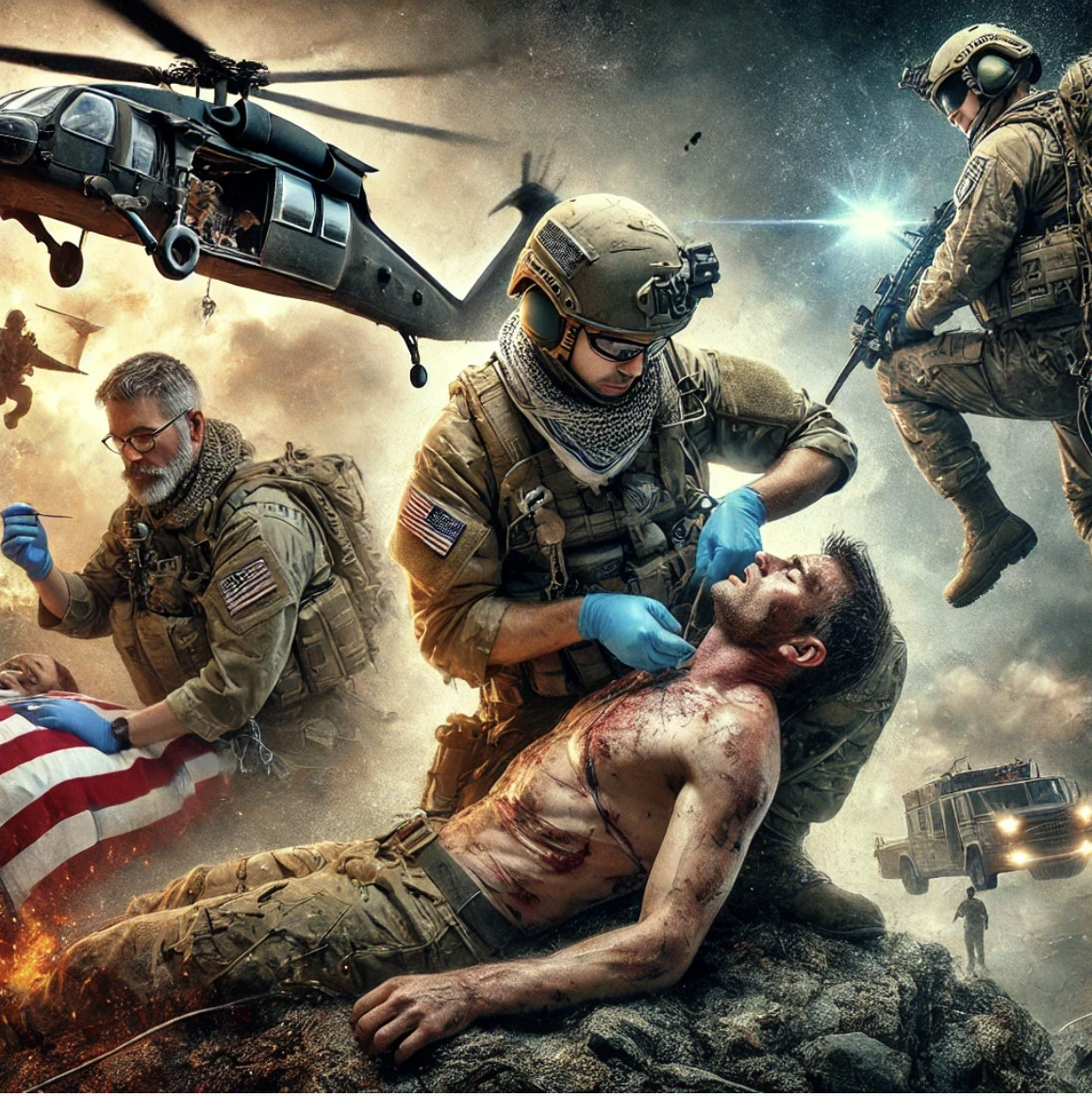
This year’s post looks especially at military medics: the trained professionals who have saved lives in some of the most extreme and dangerous conditions imaginable. From the battlefield to the clinic, their work has shaped modern medicine and helped countless service members come home. But this day does not belong to medics alone. If you are a veteran, or you love one, this tribute is for you.
In the chaos of combat, few roles are as critical as that of the military medic. These men and women are the lifeline for their fellow service members, providing care when minutes matter and resources are thin. From saving lives under fire to advancing the medicine we all rely on, military medics have left a profound mark on both military operations and civilian healthcare. In the sections below, we look at who they are, the many forms their work can take, how they train, and the legacy they leave behind—and then we turn, with full hearts, to thank every veteran.
What Is a Military Medic?
A military medic is a healthcare professional trained to provide medical care in combat and other military settings. They are often the first to reach someone who has been hurt, and their job is to stabilize and treat that person until higher-level care is available. Medics work in high-stress, high-risk environments and are trained to perform life-saving procedures under fire, often with limited supplies and support. Their work is not only about trauma, though. In garrison, in the field, on a ship, or at a clinic, medics also care for everyday illnesses and injuries, help keep a unit healthy, and watch over the people they serve with day after day.
Types of Military Medics
Military medics come in many specializations, each with its own training and responsibilities. The titles and paths differ by branch, but the mission is the same: take care of our people. Here are some of the key roles.
Combat Medic
Combat medics serve in all branches of the military and provide emergency care on the battlefield. In the U.S. Army they are often known as “68W.” They are trained to handle trauma wounds and also the basic healthcare needs of a unit—sick call, minor injuries, and the day-to-day problems that come with hard work in hard places. When someone is wounded, the combat medic is often the first medical professional on the scene, working quickly to stop bleeding, protect the airway, and get that service member to the next level of care.
Pararescue Jumpers (PJs)
Pararescue Jumpers are elite medics of the U.S. Air Force and part of the Special Operations Command. They specialize in personnel recovery: reaching people who are injured, isolated, or in danger, and bringing them home. That can mean parachuting into difficult or hostile territory, then giving life-saving care in austere conditions until a rescue can be completed. Their work combines rescue skill and medical skill, and it is among the most demanding jobs in military medicine.
Special Forces Medics
Special Forces medics serve in units such as the Green Berets or Navy SEALs and complete some of the most rigorous medical training in the military. They are prepared to provide advanced care far from traditional hospitals, often as the only medical provider for a small team. In that setting they may treat trauma, illness, and a wide range of other problems on their own, making decisions that in other places would be made in a fully equipped medical facility.
Navy Corpsmen
Navy hospital corpsmen provide medical support to the U.S. Navy and the Marine Corps. They are known for their versatility. A corpsman may serve on a ship, a submarine, or at a shore clinic, or go ashore alongside Marines in a combat zone. Wherever sailors and Marines go, corpsmen go with them—caring for daily medical needs and, when the moment comes, for life-threatening injuries as well.
Flight Medics
Flight medics specialize in aeromedical evacuation: caring for patients while they are being moved by air from the point of injury to a hospital or surgical team. In the aircraft they monitor vital signs, support breathing, manage pain, and keep a wounded service member as stable as possible for the length of the flight. That airborne stretch of care is often what gets a patient to the help they need in time.
Field Surgical Teams
Field surgical teams are mobile units of surgeons, anesthesia providers, and nurses who set up close to the front lines to perform emergency, life-saving operations. By bringing operating-room skill nearer to the fight, they give patients who cannot wait for a long trip to a large hospital a real chance. These teams work hand in hand with medics and evacuation crews, forming a chain of care from the point of injury to the operating table.
Training for Military Medics
Military medics go through rigorous training that combines medical education with combat readiness. The path varies by branch and specialty, but these are key parts of the journey.
Basic Combat Training (BCT)
Before they are medics, they are service members. All medics complete basic military training to learn essential soldiering skills—fitness, fieldcraft, and how to work as part of a unit. That foundation matters, because a medic often has to reach a patient in a dangerous environment before any care can begin.
Advanced Individual Training (AIT)
After basic training, Army medics continue to Advanced Individual Training. This is where they learn the medical side of the job in depth, including trauma care, medications, and medical evacuation. It is hands-on, practical education, built for the kinds of emergencies they may face in the field.
Specialized Courses
Many medics also complete specialized courses such as Tactical Combat Casualty Care (TCCC), which focuses on treating the wounded in a combat setting. More advanced training can include procedures such as chest decompression, placing a breathing tube, and suturing wounds—skills that can make the difference when a hospital is far away and time is short.
Field Training Exercises
Classroom learning is only part of the preparation. Simulated combat scenarios give medics a chance to practice under stress, with noise, confusion, and time pressure. The goal is to make life-saving steps second nature so that, when the real moment comes, they can still think clearly and act fast.
Special Operations Medical Training
Programs for pararescue jumpers and Special Forces medics are among the most intensive in the military. They can last more than a year and go well beyond trauma care, covering advanced trauma management, dentistry, veterinary care, and even minor surgical procedures. These medics may be the only medical help available for a long stretch of time, so their training is built to match that responsibility.
Providing Care Under Fire
One of the most challenging parts of a medic’s job is giving care while under fire. In those moments, training has to take over. Medics are taught to:
Triage Patients: Quickly decide who needs help first and who can wait, so the most serious injuries are treated when every second counts.
Stop Bleeding: Use tourniquets, clotting dressings, and firm pressure to control hemorrhage, a leading preventable cause of death on the battlefield.
Airway Management: Make sure a wounded service member can breathe, even when there is an injury or blockage, using positioning and airway tools as needed.
Evacuation: Help move the patient to a safer place or to a higher level of care, working with others so the wounded are not left behind.
Despite the chaos and danger, medics put saving lives first, often at great personal risk to protect the people beside them.
Lives Saved by Military Medics
The exact number of lives saved by military medics is impossible to count, but their impact is written in the people who came home—and in the families who got to welcome them.
Battlefield Survival Rates: Advances in battlefield medicine—better training, better equipment, and faster evacuation—have pushed survival rates for combat injuries to over 90% in recent conflicts. Medics are a central reason for that progress.
Golden Hour Doctrine: The first hour after a serious injury is often called the “golden hour.” A medic’s ability to stop bleeding, support breathing, and stabilize a patient in that window greatly improves the chance of survival.
Beyond the Military: The service does not end when the uniform comes off. Many former medics go on to become paramedics, nurses, or physicians, bringing those hard-won skills into our communities, hospitals, and ambulance services.
Military Medicine’s Impact on Civilian Healthcare
Many tools and practices we now take for granted in civilian medicine were sharpened in military care. The lessons learned in the field have traveled home and helped patients far from any battlefield.
Trauma Care Protocols: Techniques such as the widespread use of tourniquets and rapid blood transfusion were refined on the battlefield and later became standard in emergency rooms and ambulances.
Surgical Innovations: Operating close to the front lines helped advance techniques such as vascular repair and damage-control surgery, approaches that now help trauma patients in civilian hospitals as well.
Telemedicine: The military used remote medical support to guide care when a specialist could not be physically present. That same idea is now widely used in civilian healthcare, including in rural communities.
Emergency Medical Services (EMS): Today’s EMS and medical evacuation systems owe a great deal to military casualty evacuation—the idea of trained crews, rapid transport, and care that starts before the hospital doors.
Prosthetics and Rehabilitation: Work to help injured service members walk, work, and live fully again has driven advances in prosthetics and rehabilitation that now help amputees and trauma patients around the world.
The Legacy of Military Medics
Military medics represent some of the best of us—bravery, selflessness, and a steady commitment to saving lives. Their work underpins both military success and medical innovation, proving that even in the worst of circumstances, hope and care can prevail.
The lessons learned on the battlefield continue to shape healthcare, improving outcomes for soldiers and civilians alike. By understanding the incredible role of military medics, we honor their sacrifices and the lasting impact of their work.
To Every Veteran: Thank You
On this Veterans Day, the whole Minuteman Medicine family wants to say thank you—loudly, proudly, and with our whole hearts.
Thank you to every veteran who has served this country. Thank you if you served in combat, and thank you just as much if you never did. Thank you to the medics and corpsmen who ran toward the wounded. Thank you to the cooks who kept people fed, the mechanics who kept the vehicles running, the clerks who kept the records straight, the drivers who got everyone where they needed to go, and the logistics teams who made sure the right supplies arrived at the right time. Thank you to those who stood watch, repaired the radios, built the bridges, flew the planes, sailed the ships, and kept the lights on. Every one of those jobs mattered. Every one of those jobs still matters. A military cannot move, fight, heal, or come home without all of you.
Thank you to every branch—the Army, the Marine Corps, the Navy, the Air Force, the Space Force, and the Coast Guard. Thank you to the National Guard and the Reserve, who serve here at home and wherever they are called. Thank you to veterans of every era: World War II, Korea, Vietnam, the Gulf War, Iraq, Afghanistan, and every mission, peacetime posting, and quiet stretch of duty in between. Whether you served for a few years or made a career of it, whether you deployed or supported the mission from a base, a ship, a depot, or an office, we are grateful for you.
And thank you to the families. To the spouses, children, parents, and loved ones who kept the home fires burning, who waited, who moved, who worried, and who served in their own faithful way—we see you, and we thank you, too.
From all of us at Minuteman Medicine here in Hi Hat, Kentucky: we are honored to care for veterans and their families in our community. We are proud of you. We are thankful for everything you have done. We will not forget it. Happy Veterans Day, and thank you for your service—every role, every rank, every story. You have our lasting respect and our deepest gratitude.
This information is brought to you by Minuteman Medicine. We’re here to support your health with simple, honest answers! This post is not medical advice. It is for informational purposes only.
If you are looking for quality supplements at a discount, check out https://us.fullscript.com/welcome/mmm.
This article is for general education and is not a substitute for medical advice. Talk with your provider before changing medicines or treatment. Questions? Call Minuteman Medicine at 606-949-1006.